Lokta Craft: Making Something That Lasts, Around Town | May 2026
- Local Brands
- Life Style
-
 The Buzz Nepal
 - May 14 , 2026
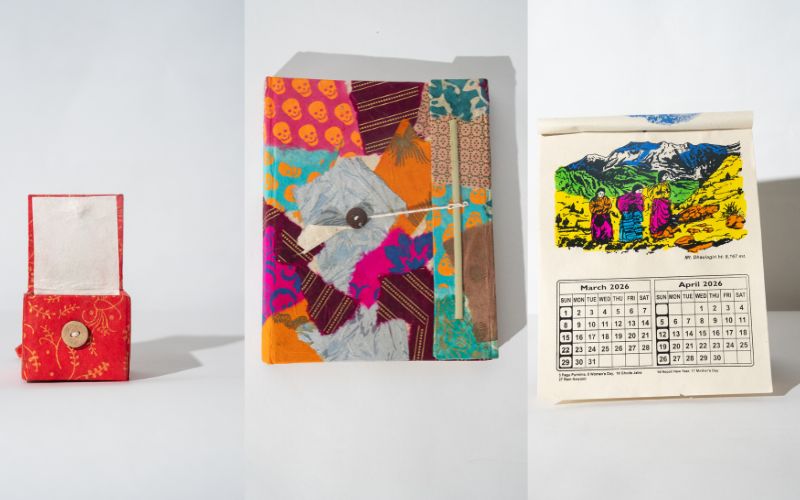
A thousand years of craft, hiding in the hills above Kathmandu. Lokta Craft is bringing it down to earth.
There is a particular irony in the fact that one of the world’s most durable materials has, for much of its history, gone largely unnoticed.Lokta paperhas been made in Nepal for at least a thousand years, and the technique used today by Nepali artisans is essentially the same one that produced the manuscripts, sacred texts, and government documents of medieval Nepal. It is a material with genuine staying power — once produced, Lokta paper can last for several millennia. And yet, for most of its existence, it has been a quiet constant rather than a celebrated one.
Lokta Craft is a brand that is working to change that.
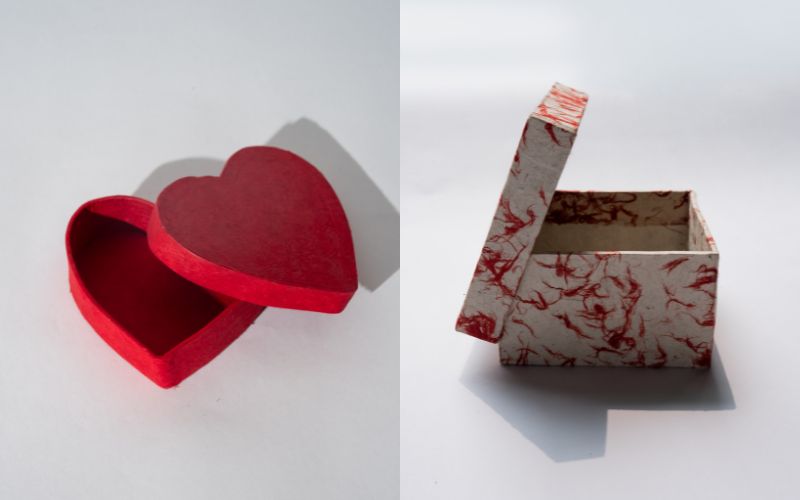
Based in Kathmandu, the sustainability-focused brand creates notebooks, gift packaging, and paper goods from handmade Lokta paper — positioning a centuries-old material within a clean,contemporarydesign language. The products are natural, biodegradable, and made with a low-waste production philosophy that feels timely without being performative.
The material itself does much of the heavy lifting. Lokta paper is made from the bark of the Lokta shrub, which grows wild in the Himalayan forests of Nepal at elevations between 6,000 and 11,000 feet. Unlike most commercial papermaking, which requires felling trees, Lokta harvesting is sustainable by nature — the bark is stripped from the lower portions of the shrub, which then regenerates within five to seven years. The plant itself is not killed. The Lokta bush automatically regenerates to a fully grown four to five metre plant within five to seven years.
What Lokta Craft brings to this material is intention. Rather than simply trading on heritage, the brand applies a minimal, considered aesthetic that allows the paper’s natural qualities — its texture, its warmth, its slight imperfections — to remain at the centre of the object. A notebook from Lokta Craft does not try to conceal what it is made of. It lets the material speak.
The production process itself has changed little over generations. The bark of Lokta shrubs is peeled from the southern slopes of the Himalayas, boiled for several hours, mashed with water, and poured in layers onto wooden screens for sun drying. The result is a sheet that is simultaneously rough and refined — atexturethat is simultaneously rough and silky, with a translucent quality when held to the light, and a particular combination of delicacy and toughness that seems almost contradictory until you learn where it comes from.
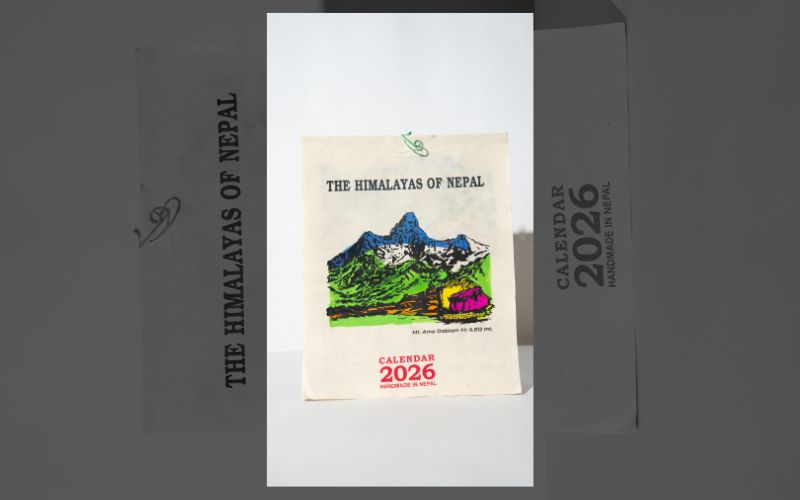
Beyond the products themselves, Lokta Craft positions the act of buying as a small but meaningful choice. In a market increasingly saturated with sustainable branding, the brand’s approach is grounded in the actual properties of what it makes — goods that are genuinelybiodegradable, responsibly sourced, and connected to a living craft tradition. The Lokta paper industry currently employs around 4,000 families in rural areas in paper making, and another 2,500 people in Kathmandu in paper product making, with 80 percent of them being women from disadvantaged ethnic groups. Choosing Lokta Craft, then, is not merely an aesthetic decision.
It is also a practical one. The paper holds up. It always has.
Instagram: @loktacraft.np
Also Read
Cuts & Coffee: Sharp Cuts, Slow Coffee, Around Town | May 2026
Kathmandu Sightseeing and The Buzz Nepal Announce Official Partnership, May 2026
Bikki Gurung Hits the Road for Nepal Tour 2026: Are You Ready Nepal?
A Soulful Escape at Kala Ghar Safari Village by Unnati | The Buzz Nepal May 2026 Feature
ZING: Kathmandu’s Rooftop Table You Don’t Want to Miss | The Buzz Nepal May 2026 Feature
Similar News