Rekriti: Style Meets Sustainability
- Local Brands
-
 The Buzz Nepal
 - March 27 , 2025

Nasana Bajracharya, a social entrepreneur has always been passionate about impact driven work. Ever since her undergraduates, she has been exploring her nterest in volunteering, teaching, working for a non-profit organization, sustainable business models, and community engagement. Further fueling this passion, she started a textile upcycling brand named Rekriti in November 2022.
What is the story or inspiration behind particularly choosing denims to create upcycled products?
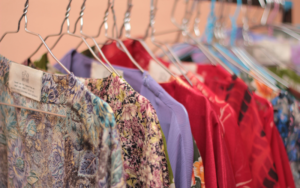
I was curious about the clothing waste that I witnessed after every Dashain sale in New Road, Kathmandu where I grew up. While researching for the solution, I came across numerous ideas in YouTube and Pinterest on upcycling clothes. Upon market research, learning from other eco-friendly businesses and a number of experiments of building prototypes, I decided to launch our brand Reकृति with upcycled denim jeans products in February 2022. We particularly chose denim to upcycle because of the nature of the fabric which was durability, sturdiness, and limited color varieties. I also noticed that the most I bought every year personally was denim jeans, and I couldn’t keep wearing them for ages because of changes in weight over the years.

What challenges are there for businesses that promote sustainability and are eco friendly in terms of profitability?
The major challenge is the lack of uniformity of raw materials when it comes to running an upcycling business. We cannot produce more than 50 or 100 pieces of the same products at a time. We can manage this issue for B2C market with planned collection and production, but when it comes to the BB market, we have to use virgin materials for bulk production as B2B sector requires uniformity of products.
Due to the lower production quantity of each batch, the cost of production is also high, which makes the product cost comparatively higher than the products found in the market. Not just ours, but every sustainable business’s challenge is to compete in price with the imported goods. Since the market for sustainable products is still in the awareness and growing phase, the challenge might last for many years to come. But we are trying our best to advocate for the cause we our enterprise is serving to increase the awareness and build our own market.

What is the process of incorporating fashion, quality, and durability in upcycled products?
We plan our every product prioritizing the design and functionality. For the quality, we make sure to only use those jeans which can be ensured to be transformed into a good product. We use fresh secondary raw materials to make sure the product’s parts are durable. The women artisans who make our products are well trained in making bags and have experience of 1 to 3 years minimum. .
How do you source denim materials?
Our primary raw material is wasted fabric from factories, tailor shops, and households. We have collaborated with 2 factories, 1 tailor shop, and 1 thrift store to consistently collect our raw materials. We collaborate with customers to upcycle their clothes to make new products for them.

How do you envision the future of upcycled fashion in Nepal?
We envision the future of upcycled fashion growing in Nepal. Rekriti started with a vision to not just be an upcycled fashion product brand, but to grow the practice of upcycling culture too. In the past 3 years of our establishment, we have been able to cater to not just the niche market of sustainable products, but also a wider market. In February 2025, we reached a new milestone by hosting an upcycling event where we launched an upcycled clothing line in collaboration with an organization and built a community of people through upcycling activities. So, we see a future of not just upcycled fashion, but a future of a community that is aware and enthusiastic about upcycling.
Also Read
Where to Find the Best International Cuisine in Nepal
Sakura Matsuri: A Celebration of Renewal & Beauty at Edamame, Kathmandu Marriott Hotel