Foundation Shade Guide: How to Find Your Perfect Fit in 7 Easy Steps
- Make Up
- Life Style
-
 The Buzz Nepal
 - July 6 , 2026

Finding the right foundation shade is one of the mosttransformativethings you can do for your makeup routine. The wrong shade can leave you looking washed out, orange, or like you are wearing a mask. The right one disappears into your skin so seamlessly that people wonder if you are just naturally that polished. Here is everything you need to know to find your perfect match.
Understand Your Undertone First
Before you even look atshadenumbers, you need to understand your undertone. Your skin tone is the surface color you see, fair, medium, tan, or deep, but your undertone is the subtle hue beneath the surface that never changes regardless of how much sun you get. There are three undertones: warm, cool, and neutral.
Warm undertones have yellow, peachy, or golden hues. Cool undertones lean pink, red, or bluish. Neutral undertones are a mix of both with no dominant hue.
A quick way to identify yours is to look at the veins on your inner wrist in natural light. Green or olive tinted veins suggest warm undertones. Blue or purple veins suggest cool undertones. A mix of both suggests neutral.

Match to Your Neck, Not Your Face
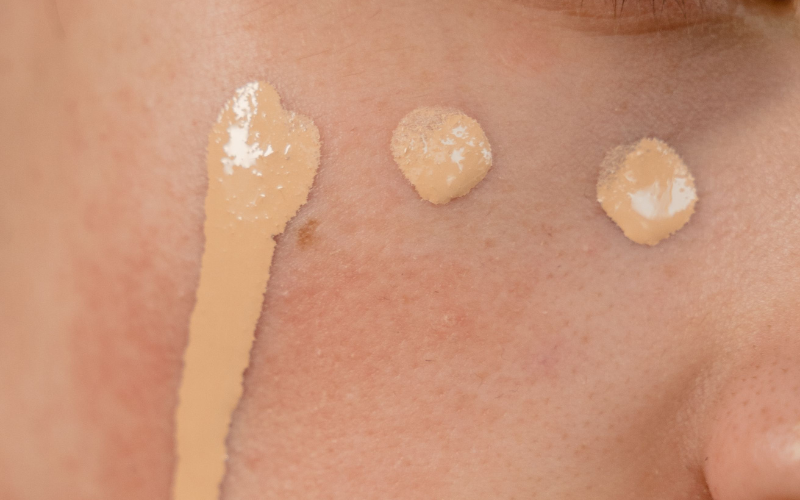
One of the most commonfoundationmistakes is matching the shade to the back of your hand or your cheek. Your face is often a different color from your neck due to sun exposure, blemishes, or uneven skin tone. Always swatch foundation along your jawline and blend it down toward your neck. The right shade will disappear at the jawline with no visible line of demarcation.

Test in Natural Light
Store lighting is notoriously deceptive. Fluorescent lighting can make foundations look pinker or ashier than they actually are, while warm lighting can make everything look more golden. Always step outside or near a window to check how a shade looks in natural daylight before committing to a purchase.

Consider Your Skin Type
Foundation formula matters as much as shade. Oily skin tends tooxidizefoundation over time, meaning the shade can shift slightly warmer or darker as the day progresses. If this happens to you, you may need to go slightly lighter than your exact match. Dry skin, on the other hand, can make foundations look more muted, so a slightly warmer shade can help restore natural radiance.

The Oxidation Factor
Oxidation is a real phenomenon that catches many people off guard. Some foundations darken or shift orange on the skin within thirty to sixty minutes of application due to the oils in your skin reacting with the formula. If you have tried a foundation that looked perfect in the store but turned the wrong color by midday, oxidation is likely the culprit. Always wear a foundation for at least an hour before deciding if the shade is truly right for you.
When in Doubt, Go Lighter
If you are torn between two shades, go with the lighter one. A foundation that is slightly too light can be warmed up with bronzer or a setting powder. A foundation that is too dark is much harder to correct and can look muddy or mask-like no matter what you do on top of it.

Building a Shade for Every Season
Your skin tone changes throughout the year, particularly if you spend time outdoors. Many makeup artists recommend owning two foundation shades, one for your lighter skin in cooler months and one for your sun-kissed skin in summer, and mixing them as needed to keep your base looking natural year-round.
Also Read
Mercure Kathmandu Introduces ‘Rooftop Escape Brunch’ With Unlimited BBQ and Pool Access, July 2026
7 Incredible Ways Yoga Can Completely Transform Your Everyday Life
10 Powerful Minutes: The Short Workouts That Will Completely Transform Your Day
Love Above the Skyline: Why the Empire State Building Proposal Captivated Millions, July 2026
Similar News