Expert Reena Explains Yoga as an Antidote to the Sedentary Life
- Life Style
-
 The Buzz Nepal
 - February 25 , 2026

In today’s fast-paced world, prolonged sitting has quietly become one of the biggest threats to our physical and mental well-being. Whether it’s working at a desk, commuting, or scrolling endlessly on devices, many of us spend 8–10 hours a day seated. Over time, this seemingly harmless habit reshapes the body; tightening hips, weakening the spine, compressing the lungs, and sapping energy. The human body was made to move, not stay still. Yoga offers a simple, effective way to “undo the chair” and restore balance.
How Sitting Affects the Body

Extended sitting shortens hip flexors and hamstrings while weakening glutes, often leading to lower back discomfort. The upper body also collapses into rounded shoulders and forward head posture, straining the neck and reducing lung capacity.
But the effects go beyond posture. Sitting slows circulation and digestion, while restricting the diaphragm, causing shallow chest breathing instead of full, deep breaths. Over time, this can leave you feeling fatigued, foggy, and disconnected from your body.
Yoga views these issues not as isolated problems, but as disruptions in alignment and prana, the body’s vital energy.
Reawakening the Spine
Gentle spinal movements are one of the easiest ways to counter sedentary stiffness.
Cat–Cow (Marjaryasana–Bitilasana) alternates spine flexion and extension, improving circulation, rehydrating spinal discs, and reconnecting breath with movement. The goal isn’t intensity; it’s awareness, fluidity, and letting the spine move naturally again.
Opening the Hips and Easing the Lower Back
Tight hips are one of the most common consequences of sitting.
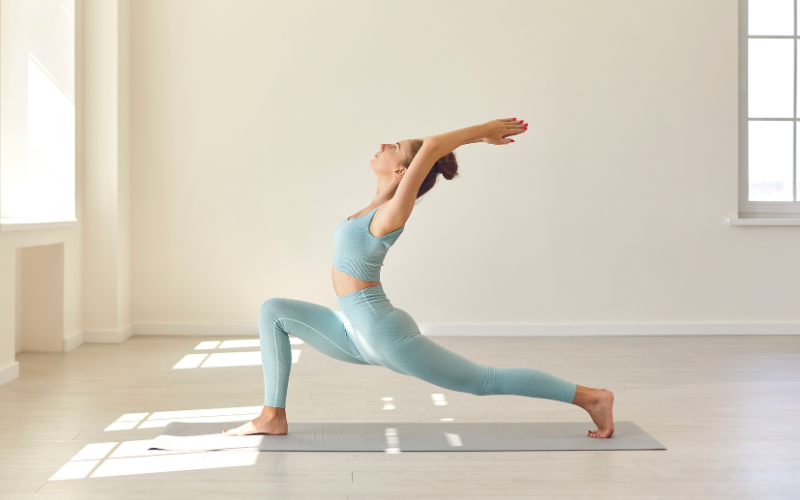
Low Lunge (Anjaneyasana) stretches hip flexors while strengthening the legs and stabilizing the pelvis.
Gentle seated or supine twists stimulate digestion and relieve lower back tension, creating space between compressed vertebrae. Even five minutes of focused hip-opening poses daily can make a noticeable difference.
Restoring Posture and Breath
Chest-opening poses, such as Bhujangasana (Cobra Pose) or supported heart openers with a bolster, counter rounded shoulders and expand the rib cage, allowing the diaphragm to work efficiently.
Equally important is breathwork. Simple diaphragmatic breathing or Dirga Pranayama (three-part breath) can be done even at your desk. Deep, mindful breathing activates the parasympathetic nervous system, helping reduce stress, improve focus, and recharge energy.
A Quick 5-Minute Daily Reset
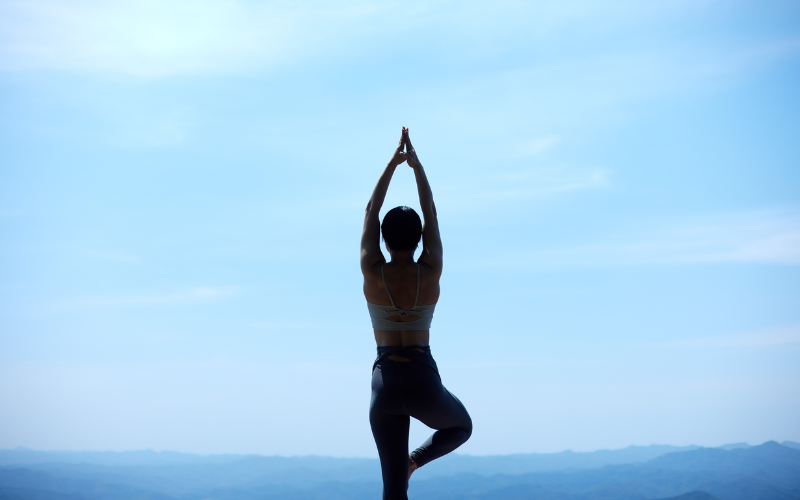
For busy schedules, a short daily sequence can make a big impact:
- Cat–Cow – 1 minute
- Low Lunge (both sides) – 1 minute each
- Seated Twist – 1 minute
- Gentle Chest Opener – 1 minute
- Deep Breathing – 1 minute
This mini-routine interrupts stagnation and reminds the body of its natural design; mobility, strength, and ease.
Movement as Medicine
Sitting may be a modern reality, but its consequences aren’t inevitable. Yoga doesn’t demand a total lifestyle overhaul; it encourages small, intentional acts of awareness. By restoring posture, breath, and circulation, you can undo the physical imprint of the chair.
Movement isn’t a luxury, it’s biological medicine. With consistent practice, we reclaim vitality, alignment, and a deeper connection to ourselves.
About the Author
Reena Maharjan is a passionate yoga educator with over 10 years of practice and 8 years of teaching experience. She is a 500-hour certified instructor trained in Nepal and India. Also certified in prenatal/postpartum yoga and mat Pilates, she blends ancient wisdom with mindful movement.
Instagram: yogawith_reena
For more yoga tips like this, stay tuned to The Buzz Nepal, where true wellness begins with real journeys.
Also Read
Female Filmmakers Take Center Stage in NIFF’s “Kurakani Series #2: Her Cinema, Her Voice”
Sambaa’s Injury Exposes Harsh Reality for Nepal’s Football Heroes
Braces vs Clear Aligners in Nepal: Which Orthodontic Treatment Is Best for Adults?
Jessica Singh Thakuri Resigns as Miss Grand Nepal 2025 Amid Allegations of Mistreatment
A Mother vs. Ghostface: Why Scream 7 Is the Franchise’s Most Personal Chapter Yet
Similar News