Why Your Eyes Sometimes “Erase” Reality”: The Strange Science of Troxler’s Effect
- Life Style
- Entertainment
-
 The Buzz Nepal
 - April 2 , 2026
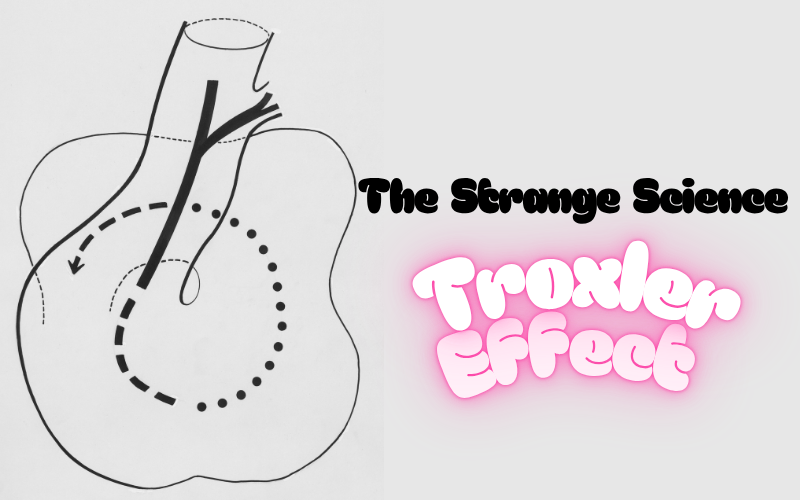
Ever stared at a single point for a little too long and noticed the edges of your vision start to blur, fade, or even disappear? That eerie experience isn’t your imagination, it’s a real neurological phenomenon known as Troxler’s effect.
What Is Troxler’s Effect?
First described in 1804 by Swiss physician Ignaz Paul Vital Troxler, Troxler’s effect occurs when you fix your gaze on a stationary point for an extended period. As your eyes remain still, peripheral details (secondary, non-essential, or supplementary information that exist on the margin of a central topic, event, or object), especially those with low contrast begin to fade or vanish entirely from your visual field.
In simple terms, your brain starts ignoring what it considers “unchanging” information.
Why Does It Happen?
Your visual system is designed for efficiency, not perfection. The brain prioritizes detecting movement and change, which are more important for survival. When something in your field of vision remains static, your neurons gradually reduce their response to it; a process called neural adaptation.
As a result:
- Stationary objects in your peripheral vision fade away
- Colors may dull or shift
- Edges become less defined
It’s not your eyes failing but your brain optimizing.
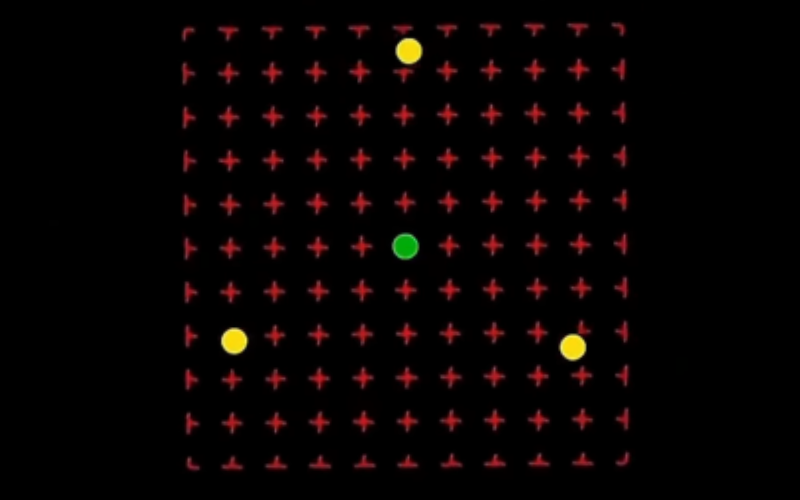
Try It Yourself
You can experience Troxler’s effect in seconds:
- Pick a fixed point (like a dot on your screen)
- Stare at it without moving your eyes
- Within 10-30 seconds, notice how surrounding details begin to fade
The effect becomes stronger in dim lighting or with low-contrast visuals.
Why It Matters
Troxler’s effect isn’t just a visual trick, it reveals how perception is constructed. What we “see” isn’t a perfect recording of reality, but a filtered interpretation shaped by the brain.
This principle is used in:
- Optical illusions
- Visual art and design
- Neuroscience research on attention and perception
The Buzz Take
In a world constantly fighting for your attention, Troxler’s effect is a quiet reminder: if something doesn’t change, your brain may simply tune it out.
Sometimes, what disappears isn’t actually gone; you’ve just stopped noticing it, isn’t it?
Also Read
Thamel Street Food Fest 2026 Turns Up the Heat in Kathmandu
Ekaya Confirmed for LIVE Performance at Bhimsenthan Mahotsav 2083
Michael Set for April 24 Release in Nepal — Biopic on the King of Pop
Buzz Expert On The Rise of Cosmetic Dentistry: Why More People Want a Perfect Smile
Nepal’s Rising MMA Force Rabindra Dhant Advances in Road to UFC Season 5
Similar News