Sabin Rai & The Pharaoh’s “Malai Hera” Beautifully Portrays a Love Too Loud for Silence.
- Entertainment
-
 The Buzz Nepal
 - April 12 , 2026

There are love songs, and then there are love stories that dare to go somewhere uncomfortable. Sabin Rai & The Pharaoh’s latest release, Malai Hera, is firmly in the latter camp, a track that wraps a tender, aching melody around a narrative with real stakes and real heartbreak.
A Song Born in Stillness
At its core, Malai Hera, which loosely translates to “Look at Me”, is a gentle love song. The kind where a single glance holds a thousand unspoken feelings. Where hearts speak in silence. Sabin Rai‘s signature warmth is all over the composition: understated rock-blend, melodic, and emotionally honest. It is the sort of song that settles into your chest quietly and refuses to leave.
But what lifts this release above a straightforward ballad is the music video, directed by Abhi Sampang Rai under Chinoe Tales Production with their signature storytelling which can only be described as “beautiful melancholy”. It tells a story that is, at turns, sweet, devastating, and ultimately hopeful, and it does so with a maturity that is refreshing.
A Love Story Told in Sign
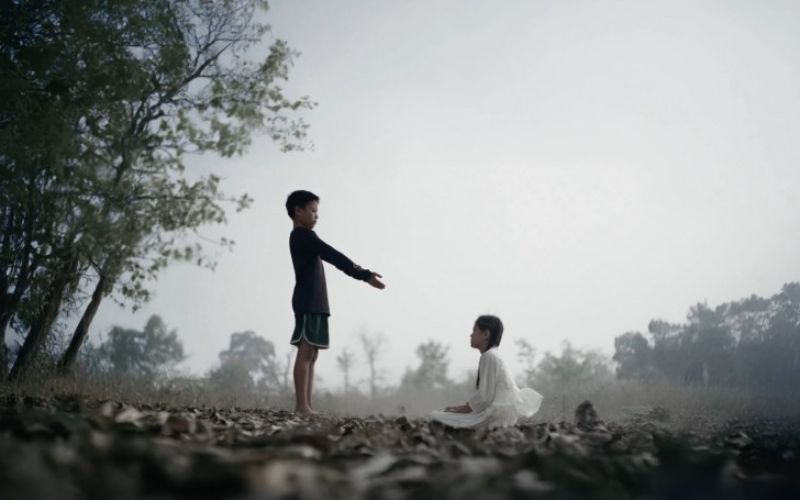
The narrative centres on a young woman who is deaf and mute, and a young man whose path has crossed hers longer than either of them may fully reckon with. In an early flashback, the two are shown as children: the girl, visibly upset and in distress, is helped by the boy with a hand extended in comfort, or metaphorically speaking, in acceptance.

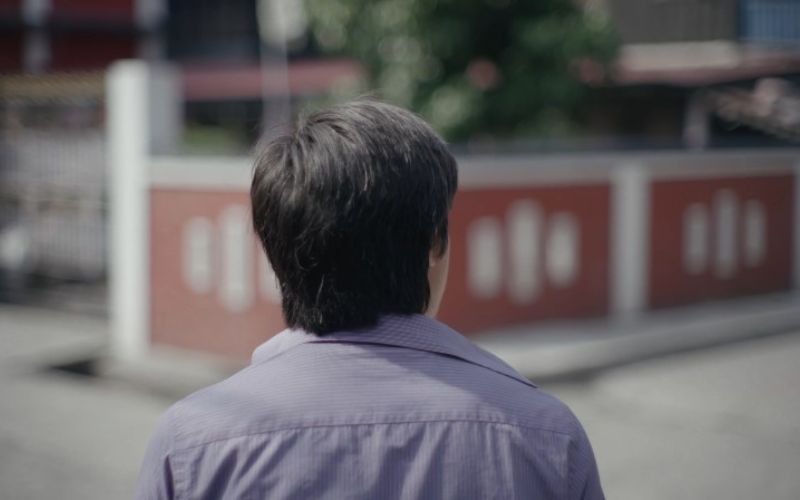
As adults, the pull between them is visible again, in the glances, and the hesitation. But the young man struggles to act on his feelings in any meaningful way. When the girl summons the courage to confess how she feels, communicating through sign language in what is the video’s most quietly powerful scene, he walks away without a response.

A Story That Doesn’t Look Away
What distinguishes the video from a conventional romantic narrative is what comes next. The young man, back among his circle of friends, becomes part of something harder to excuse, the group turns its attention to mocking and taunting the girl. Her brother, unwilling to let it pass, confronts them. The situation escalates; he is attacked and seriously injured.
The young man’s response to this crisis becomes the hinge of the story. It is he who steps forward to help the girl carry her brother to hospital, a gesture she initially and understandably refuses to acknowledge. The hurt she carries in that moment is not just about the attack. It runs further back. When she eventually returns to him, after learning her brother is out of danger, the reconciliation is not triumphant so much as honest. Two people deciding, in the aftermath of something painful, that there is still something worth holding onto. After all, all of life is as such. We arrive at various crossroads, and decisions that change what could have been into what is.
The Closing Image
The video’s epilogue offers its most telling moment without spelling it out. The young man is seen stepping away from his friends and walking toward the girl and her brother, the two of them meeting at a crossroads. The symbolism is straightforward but effective, a choice made, a direction taken, a person left behind in favor of one worth showing up for.
What It All Adds Up To
Malai Hera works as both a song and a visual piece because it does not flatten its characters into easy roles. The young man is neither a villain nor a straightforward hero; he is someone who fails, more than once, before finding a moment of clarity. The young woman, meanwhile, is written and portrayed with genuine dignity, a person who loves and grieves and forgives on her own terms, her deafness neither sensationalized nor treated as metaphor, but simply part of who she is.
The childhood connection between the two, easy to overlook but quietly essential, gives the story a deeper emotional logic. The question the video poses is not whether love can survive difficulty, but whether people are capable of growing into the version of themselves that love actually requires.
The song and its video together ask a question worth sitting with: what does it mean to truly see someone? As the lyrics spell out, “संघर्ष हो जिन्दगी, सामना संगै गर्ने भाग्य कोरौला हामी”
Malai Hera by Sabin Rai & The Pharaoh is out now on YouTube.
Also Read
Forever 52 Proudly Launches in Nepal | Mishisa Cosmetics
Aruna Gurung: Bringing Global Skincare Excellence Back to Nepal for Over 15 Transformative Years
Buneko Nepal: Weaving Tradition into Modern Craft
Common Gastrointestinal Issues in Cats, and Cure: Don’t Ignore these Signs, April 2026
The Buzz Nepal Cover Story, April 2026: Mingma David Sherpa is Fearlessly Above the Clouds
Similar News